
![2009 [BADGE].png](https://static.wixstatic.com/media/1a0618_96d254a72f314d68bd1d560123383b05~mv2.png/v1/crop/x_0,y_116,w_1667,h_1436/fill/w_137,h_118,al_c,q_85,usm_0.66_1.00_0.01,enc_avif,quality_auto/2009%20%5BBADGE%5D.png)
The Boilers: South Queensferry’s smelly soap story

Amongst the convicts on a ship headed to New South Wales, Australia, in 1815 was George Paterson. George had been sentenced to fourteen years of hard labour in the penal colony for stealing soap in Queensferry.
George’s crime was aggravated, seemingly, by the fact that he stole from his employer. On 29th December 1814, he broke into two soap-works in South Queensferry - John Taylor & Sons and Campbell Innes. He took “300 weight of hard yellow soap in bars and wedges.” It would be interesting to know how he carried it off and what his escape plan was, as that’s a considerable weight to transport alone! Perhaps he didn’t get far; he was arrested and found guilty at his trial at Edinburgh High Court of Justiciary in March 1815. By May, he was on his way from the Tolbooth (Edinburgh’s jail) to Leith, boarding a ship to London in August, and thence aboard the convict ship “Fanny” which arrived in New South Wales in January 1816. His name appears the next month on a list of convicts to be forwarded to Windsor (north western Sydney) for “distribution.” It was just over a year since his disastrous South Queensferry escapade.
Soap manufacturing was one of South Queensferry’s major industries for a relatively brief period of less than 100 years, from around 1770 until the 1840s, when it had declined to one small manufacturer remaining. The soap industry boomed elsewhere in Scotland too.
It was a luxury item, heavily taxed at the time of George’s crime, perhaps explaining the severity of his sentence which was longer than the average transportation sentence. The soap tax had been introduced by the UK government in 1712, levied on producers and causing soap prices to soar. It was a lucrative source of revenue for the government. Manufacturers were closely regulated, with all equipment having to be kept under lock and key to prevent black-market production. Only the well-off could afford to be clean.
But it was a smelly business. The main ingredients were tallow (animal fat) and sea kelp. The demand for tallow was such that it was imported from overseas, and the port at South Queensferry was ideally placed for this as well as for delivery of kelp from the Hebrides. The soap factories, or Boilers as they were known, were established close to the harbour. The boiling process produced a very unpleasant smell that hung over the town, and was tolerated since the Boilers were important local employers. “The Traveller’s Guide Through Scotland and its Islands” (Vol 1,1814), whilst waxing lyrical about the beautiful environments around us which “conspire to make the prospect truly grand and noble,” had only this to say about the town itself: “The town of Queensferry lies low, and is rendered disagreeable by the smoke of the soap works.”

In addition to the smell, residents had to cope with manufacturing waste lying in the streets. The waste from the soap making process was good fertiliser and was used on fields around Queensferry, but the cost of transport was considerable, and much ended up dumped in the streets.
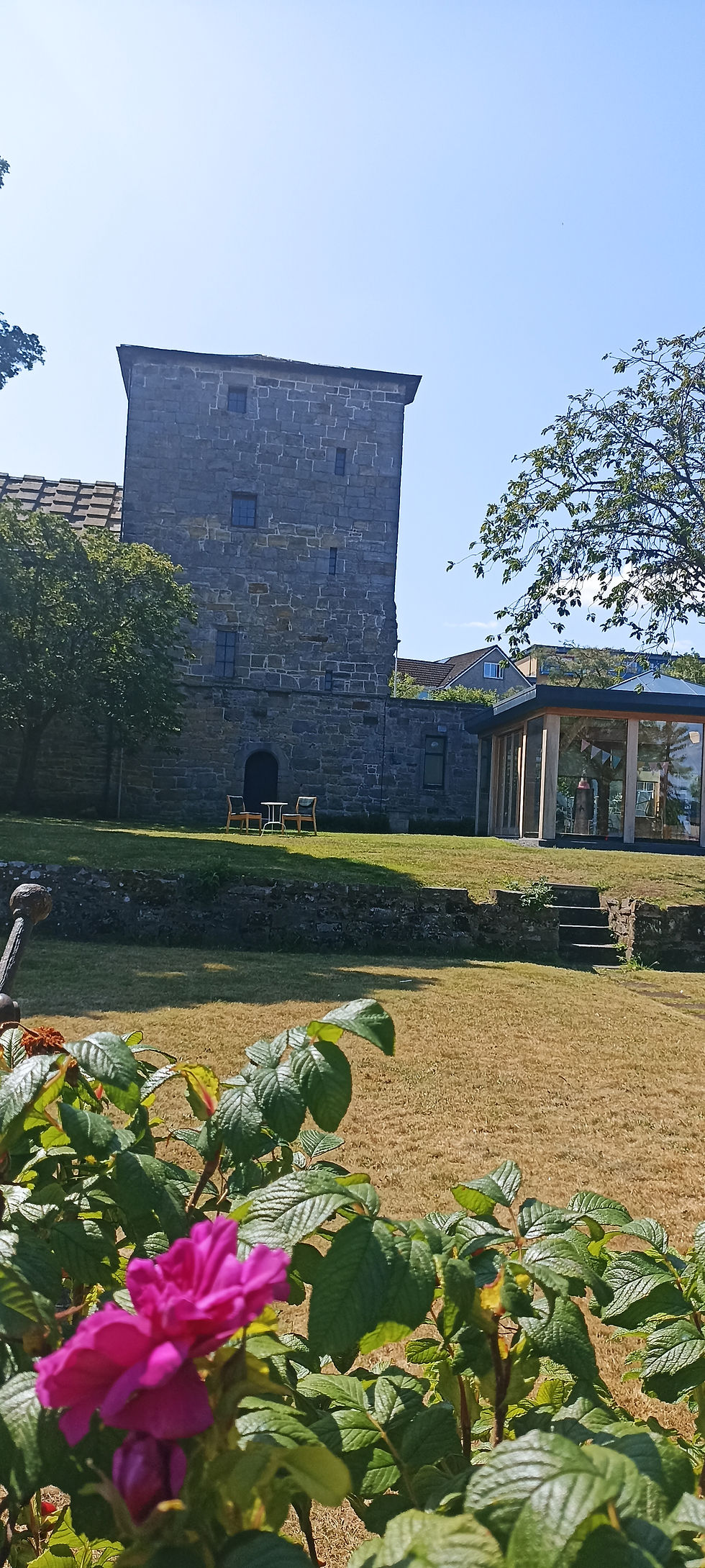
In 1801 the Town Council obtained permission from the Dundas family to rent the yard at the back of the Priory Church, which was in disrepair at that period of time and not in use as a place of worship.
Post-Reformation, the congregation had moved to a new church, and the Priory Church and grounds were put to various uses by the town including for drying fishing nets, storing potatoes and coal, selling groceries and stabling horses. So in 1801 rent of the church yard was granted for use by the Boilers on the condition that the streets of South Queensferry were “kept free of carts and all rubbish.”
The onerous regulatory regime had sent much soap-making abroad and the industry declined here. The soap tax was repealed in 1853, by which time the soap industry had been replaced in South Queensferry by distilling. Soon, the railway arrived at Dalmeny, then in 1883 construction of the Forth Rail Bridge got underway. Soap’s relatively short duration in South Queensferry left its mark though as the first modern industrial activity here. It set up infrastructure and established Queensferry’s place in local transport networks and supply chains.

Published in Konect August 2026
Author: Helen-Jane Gisbourne

Comments